

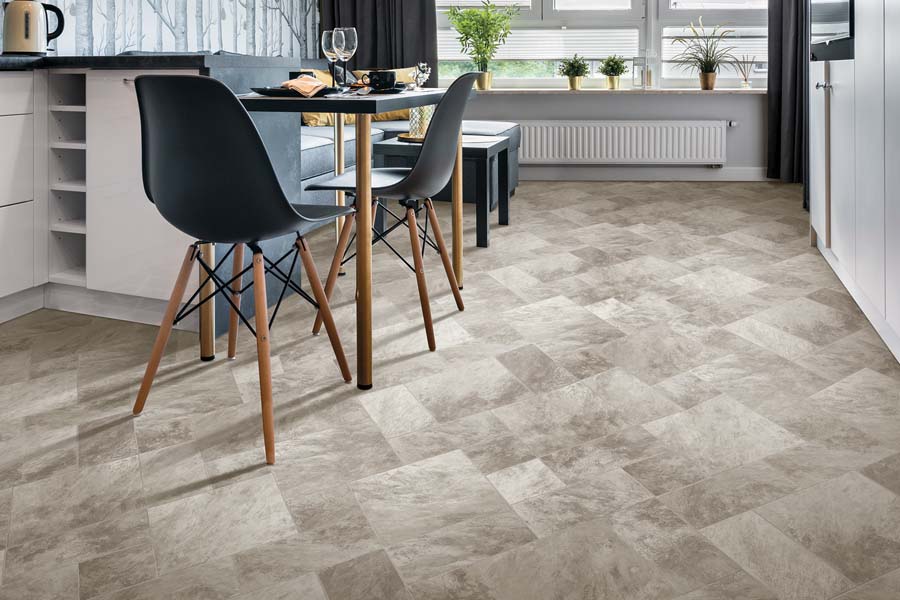
The kitchen can be tough on flooring. Water splashes near the sink. Food hits the floor. Chairs scrape back and forth. Pets race through at dinnertime.
Yet this is also one of the most visible rooms in your home, so looks matter just as much as performance. That creates an important question: should you choose luxury vinyl or hardwood?
Both can be excellent kitchen flooring choices, but for different reasons. Luxury vinyl offers impressive moisture resistance and simple maintenance, while hardwood delivers natural beauty and long-term character.
At Lawson Brothers Floor Company, we’ve helped St. Louis homeowners make flooring decisions since 1928. Here’s how these two popular options compare.
Is luxury vinyl or hardwood better for kitchens?
There’s no single winner for every home.
If moisture resistance, easy maintenance, and everyday practicality are your top priorities, luxury vinyl flooring for kitchens may have the advantage.
If you want authentic natural wood, long-term value, and the ability to refinish your flooring in the future, hardwood may be worth the additional care. Consider your household first.
Do you have children or pets? How often do you cook? Is your kitchen connected to an exterior entrance? Are spills common? How much maintenance are you comfortable with?
Your answers can quickly point you towards one material or the other.
How does luxury vinyl handle kitchen moisture?
This is one of luxury vinyl’s biggest strengths.
Many modern luxury vinyl products feature waterproof construction, making them well suited for kitchens where spills and splashes are inevitable. Waterproof vinyl flooring can give homeowners additional peace of mind around sinks, dishwashers, refrigerators, and other areas where water may reach the floor.
That doesn’t mean water should be left sitting indefinitely. Spills should still be cleaned promptly, and product warranties and installation requirements vary.
Still, for homeowners concerned about everyday kitchen moisture, luxury vinyl is tough to beat.
Can hardwood flooring be installed in kitchens?
Yes. Hardwood has been installed successfully in kitchens for generations.
The key is understanding that real wood reacts to moisture. Spills should be wiped up quickly, and plumbing leaks need immediate attention.
Maintaining appropriate indoor humidity can also help hardwood remain stable throughout seasonal changes.
For many homeowners, the additional care is worth it.
Natural hardwood brings warmth and character that manufactured flooring can imitate but not completely duplicate. Every board has genuine grain patterns, color variation, and natural details.
If you already have hardwood in an adjoining dining or living room, continuing it through the kitchen can also create a beautiful, cohesive appearance.
Which flooring looks better in a kitchen?
That comes down to personal preference.
Hardwood is the real thing. Oak, maple, hickory, and other species each bring distinct grain patterns and colors to a room. Hardwood can work equally well in historic St. Louis homes, traditional kitchens, and contemporary renovations.
Luxury vinyl has become much more realistic, though.
Modern luxury vinyl plank can recreate the look of hardwood with detailed grain patterns, knots, textures, and natural color variation. LVT flooring can also reproduce tile and stone visuals, giving homeowners even more design options.
From across the room, high-quality luxury vinyl can be remarkably convincing.
Up close, however, homeowners who value the natural variations of genuine wood may still prefer hardwood.
Which option is more durable for busy kitchens?
Both can be durable, but they handle daily life differently.
Luxury vinyl typically has a protective wear layer designed to resist everyday scuffs, stains, and wear. That makes it attractive for active households with children, pets, frequent guests, or heavy kitchen traffic.
Hardwood can scratch and dent, depending on the wood species, finish, and household activity. But hardwood has an important long-term advantage: many products can be sanded and refinished.
That can restore an aging floor and even give it an entirely new appearance.
Luxury vinyl generally cannot be refinished. When it eventually reaches the end of its usable life, replacement is usually the solution.
Is luxury vinyl easier to maintain than hardwood?
Generally, yes.
Luxury vinyl requires relatively simple routine care. Sweep or vacuum regularly to remove crumbs, dirt, and grit. When deeper cleaning is needed, use a cleaner recommended by the flooring manufacturer.
Hardwood requires a little more attention. Excess water should be avoided, spills should be addressed quickly, and cleaners need to be appropriate for the specific wood finish.
Furniture pads and entry mats can help protect either flooring type.
If low-maintenance flooring is high on your priority list, luxury vinyl flooring for kitchens has a clear appeal. If you don’t mind giving your floor a little extra care in exchange for genuine wood, hardwood remains a strong option.
Which flooring feels better underfoot?
Both luxury vinyl and hardwood can be comfortable, but they feel different.
Hardwood has the solid, natural feel people expect from real wood. It also tends to feel warmer underfoot than hard surfaces such as ceramic or stone tile.
Luxury vinyl can have a slightly softer feel. The exact comfort level depends on the product construction, installation method, and underlayment requirements.
Sound matters, too. Flooring construction and installation can influence how footsteps and other noises travel through the room.
If comfort is important, seeing and walking on flooring samples in person can help.
Is luxury vinyl or hardwood more affordable?
Luxury vinyl often has a lower initial cost than hardwood, although prices vary widely based on product quality, construction, brand, and installation requirements.
Hardwood generally represents a larger upfront investment. However, its potential longevity and ability to be refinished can add value over the long term.
Instead of comparing price per square foot alone, consider the complete project.
Installation, subfloor preparation, trim, transitions, maintenance, expected lifespan, and future refinishing or replacement should all factor into your decision.
The least expensive flooring today isn’t necessarily the best value for your home over time.
How do you choose the right kitchen flooring?
Start with your priorities.
Choose luxury vinyl if you want strong moisture resistance, simple maintenance, realistic wood or tile visuals, and a potentially lower upfront cost. Waterproof vinyl flooring can be especially appealing for busy households where spills are simply part of daily life.
Consider hardwood if natural materials, authentic character, longevity, and refinishing potential matter more to you.
Still unsure? That’s normal. Flooring looks and feels different in person than it does online.
Lawson Brothers Floor Company has served the St. Louis metropolitan area since 1928. Our family-owned business offers hardwood, luxury vinyl, LVT flooring, and other quality flooring from leading manufacturers, along with personalized guidance to help you make an informed decision.
If you’re remodeling a kitchen in St. Louis, Clayton, Town and Country, Chesterfield, Frontenac, Wildwood, Richmond Heights, or Sunset Hills, visit Lawson Brothers Floor Company.
We’ll help you compare luxury vinyl and hardwood based on your kitchen, lifestyle, design goals, and budget so you can choose a floor that looks great and works just as hard as your kitchen does.


